Tree record 冬 · Winter
Itoigawa juniper, bunjin: carving shari without losing the tree
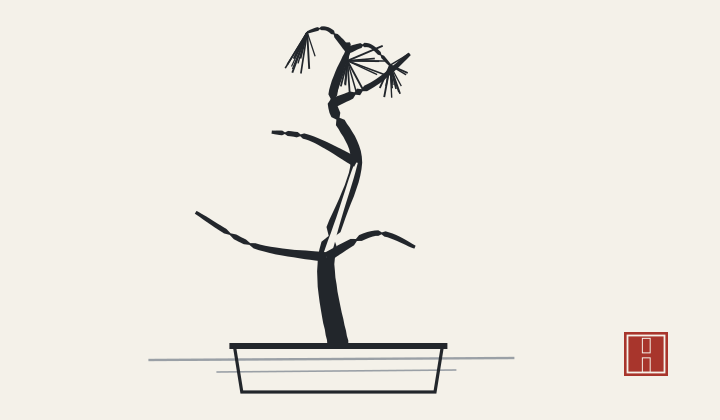
- Style form
- Bunjin — literati, tall sparse trunk, foliage confined to the crown
- Pot
- Shallow unglazed round, 21 x 6 cm
- Wire gauge
- 2.0 mm on the two retained branches, 1.0 mm on foliage
- Wiring window
- December to February, while the sap is down
- Prune window
- Pinch through the growing season; structural cuts in February
- Repot interval
- Every 3 years, late March
- Wintering
- USDA zone 6b; tolerant of frost once roots are established
- Years in training
- 14
Cultivation record
Literati juniper lives or dies on the line of the deadwood. This tree lost its entire upper trunk to a grafting knife in 2019 and spent four seasons being carved back into something that reads as aged rather than as damaged.
Starting material and the decision that shaped it
The tree was bought in 2012 as a field-grown Itoigawa with a 4 cm trunk and heavy low branching. For four seasons it was grown as a conventional moyogi. In 2016 a graft of Itoigawa foliage onto the single low branch failed twice and the branch was lost, leaving one long trunk with foliage only at the top. Rather than restart, the decision was made to remove all the lower branching and push the whole tree toward bunjin — the style that exists precisely for trees that have lost their middle.
Reading the live vein before carving
A juniper carries its life in a narrow strip of cambium running from root to shoot. On this tree the vein is visible as a slightly raised, lighter line on the west face, about 18 mm wide at the base and narrowing to 9 mm below the crown. The whole shari plan follows it. Water was sprayed on the trunk in February and the vein was traced by the way the water beaded, which is quicker and more reliable than judging by eye. Everything carved away lies to the east of that line.
Tools, and why the work took four winters
The carving was done with a hand pull-shave for bulk removal, a rotary tool with a 6 mm ball burr for the hollows, and a fine wire brush to raise the grain. It was spread across four winters rather than done in one, because the tree has to close a wound against the vein each time before more bark can be removed. Each session removed no more than 30 percent of the remaining bark, and each session was followed by a full growing season. Total deadwood now runs 46 cm from the base to the crown.
Preserving and colouring the deadwood
Freshly carved juniper wood is pale and raw. It is treated with lime sulphur at 20 percent dilution in February, brushed on and left to dry in shade — direct sun on wet lime sulphur bleaches unevenly. The first application was in 2020 and it is repeated every other winter. A second, weaker pass with a 5 percent dilution is applied only in the hollows to darken them slightly, which is what makes depth read from a distance. Do not seal the deadwood with anything; it needs to breathe and weather.
Keeping the crown alive and small
A bunjin crown has to look light. Foliage is pinched from April to September by removing the growing tip between thumb and forefinger, never with scissors, because cut juniper needles turn brown at the tip and stay brown for a year. The crown is allowed a maximum spread of 34 cm on a 1.1 m tree. Watering is more frequent than the shallow pot suggests: twice daily in July and August, and the tree is never allowed to dry out completely, because a juniper that goes dry once may drop a whole branch six weeks later with no warning.
What to remember
- Trace the live vein with water in winter before planning any shari.
- Remove no more than 30 percent of the remaining bark in one session, one session per season.
- Lime sulphur at 20 percent in February, repeat every second winter; never seal deadwood.
- Pinch juniper foliage by hand; scissors leave brown tips that last a year.
Note Growing notes are provided for general information only. Carving living wood is irreversible, and you should practise on dead material before working on a tree you value.