Seasonal note 冬 · Winter
Lichun: the late-winter window that decides the year's structure
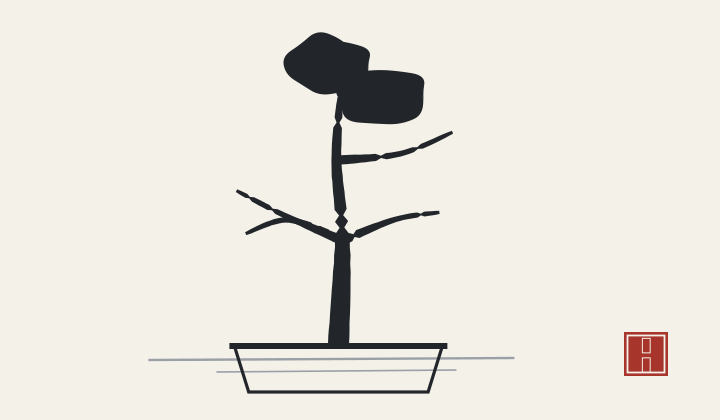
- Solar term
- Lichun, around 4 February
- Daylight in this window
- Around 10 hours at 35 degrees north
- Main task
- Structural pruning and wiring while trees are still fully dormant
- Watch out for
- A warm spell followed by a hard frost, which splits newly cut wood
- Do not do
- Repot yet, unless the species is a late-winter repotter such as pine
Cultivation record
In the traditional calendar Lichun marks the start of spring, but on the bench it is still the depths of dormancy — and that is exactly why it is the most productive fortnight of the year for anyone working on deciduous trees.
Why this is the structural window
From Lichun to about the first week of March, a deciduous tree shows its complete skeleton, holds no leaves to obscure the branch spacing, and has wood that is as flexible as it will be all year relative to its stiffness in summer. That combination is what makes it the right fortnight for the year's heaviest structural decisions: removing major branches, choosing new leaders, wiring primary structure, and clearing out everything that has grown in the wrong direction over the previous season.
The order of work that avoids regrets
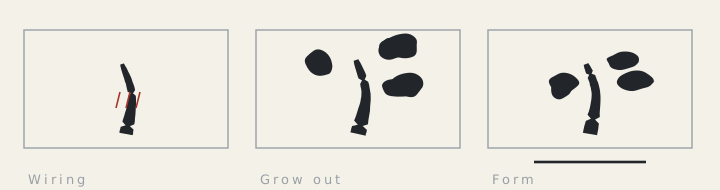
Work in this order and the tree tells you what to do next. First, remove anything dead, damaged or crossing. Second, take out branches that grow straight up or straight down from a crotch. Third, decide which branches will form the permanent framework and remove the competition. Fourth, wire the remaining structure. Cutting before wiring matters because every removal changes what the remaining branches have to do, and wiring a branch that is about to be cut is wasted work.
The frost trap
The most damaging pattern in this period is a warm spell of five to seven days followed by a hard freeze. Wood cut during the warm spell has begun to move sap and is more brittle than fully dormant wood; when the temperature drops, the cut face splits along the grain and the split can run several centimetres down the branch. Where a freeze is forecast within a week, it is better to delay the cut than to make it and hope. Trees in unheated cold frames and garages are much safer than trees that have been brought indoors.
What to leave until later
Repotting is not a Lichun job for most deciduous species; it belongs at bud swell, roughly six weeks later. Feeding should not start yet either, because roots are not yet active enough to take up nutrients and unused fertiliser salts accumulate in the soil. Watering is minimal through this period: once a week for trees in cold storage, and only enough to stop the root ball drying completely. The one exception on repotting is pines, which are repotted in late winter just as the buds begin to move and before the candles extend.
What to remember
- Lichun to early March is the year's best structural window for deciduous trees.
- Work in order: dead and crossing, then vertical shoots, then framework selection, then wiring.
- Delay any cut if a hard freeze is forecast within a week; warm-spell cuts split when frozen.
- Do not repot deciduous trees yet and do not start feeding; both belong about six weeks later.
Note Calendar terms describe a traditional seasonal marker, not a local weather forecast. Always judge timing by what your own trees are doing.